

Quick Summary
What sail telltales are
Why every sailboat uses them
How telltales reveal airflow over the sails
The three telltale positions every beginner should recognize
How to adjust sail trim using telltales
The difference between jib telltales and mainsail telltales
Introduction
Many beginners believe experienced sailors instinctively know when a sail is trimmed correctly. Instead, skilled sailors watch telltales because they provide instant feedback about airflow over the sail. These small ribbons make invisible air easy to see and are one of the simplest tools for improving sail trim. However, they do not measure wind speed—they reveal whether airflow remains attached to the sail.
The Big Idea
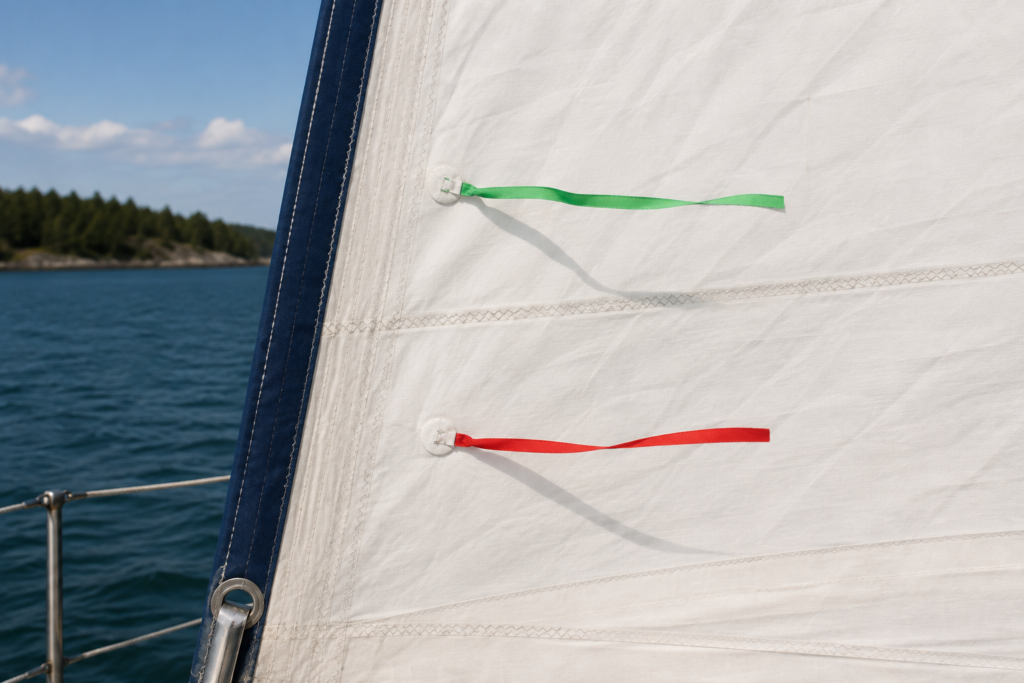
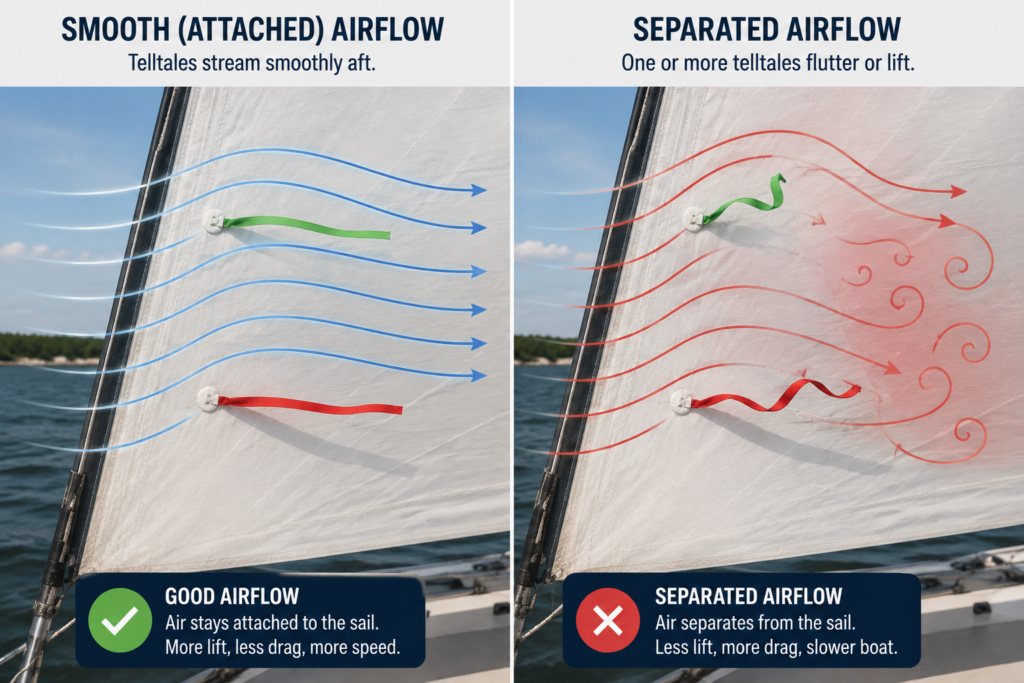
Telltales indicate airflow, not wind strength. When airflow remains attached, the telltales stream smoothly aft. When airflow separates, one or more begin to flutter or lift. Therefore, telltales remove the guesswork from sail trimming. Because sail angle and sail shape affect airflow, they connect directly to concepts covered in Sail Controls Explained, How to Trim a Sail, and How to Read the Wind.
What Are Sail Telltales?
Telltales are small pieces of yarn, ribbon, fabric, or lightweight film attached to sails. You’ll commonly find them near the luff of the jib and along the leech of the mainsail. Sailmakers install them so sailors can see airflow that would otherwise be invisible. First observe the telltales. Next make one small adjustment. Finally check the telltales again. This simple routine becomes one of the most valuable habits in sailing.
If you’re looking to build practical sailing skills beyond this guide, the Royal Yachting Association (RYA) offers internationally recognized training resources for beginner and intermediate sailors.
Understanding Jib Telltales
Where They Are Located
Jib telltales are normally attached near the luff of the jib, with matching telltales on both the windward and leeward sides of the sail. Most cruising sails have several sets from the bottom to the top so you can judge airflow over the entire sail. However, beginners should focus on the middle set first because it is usually the easiest to see and interpret.
The Three Telltale Patterns Every Beginner Must Learn
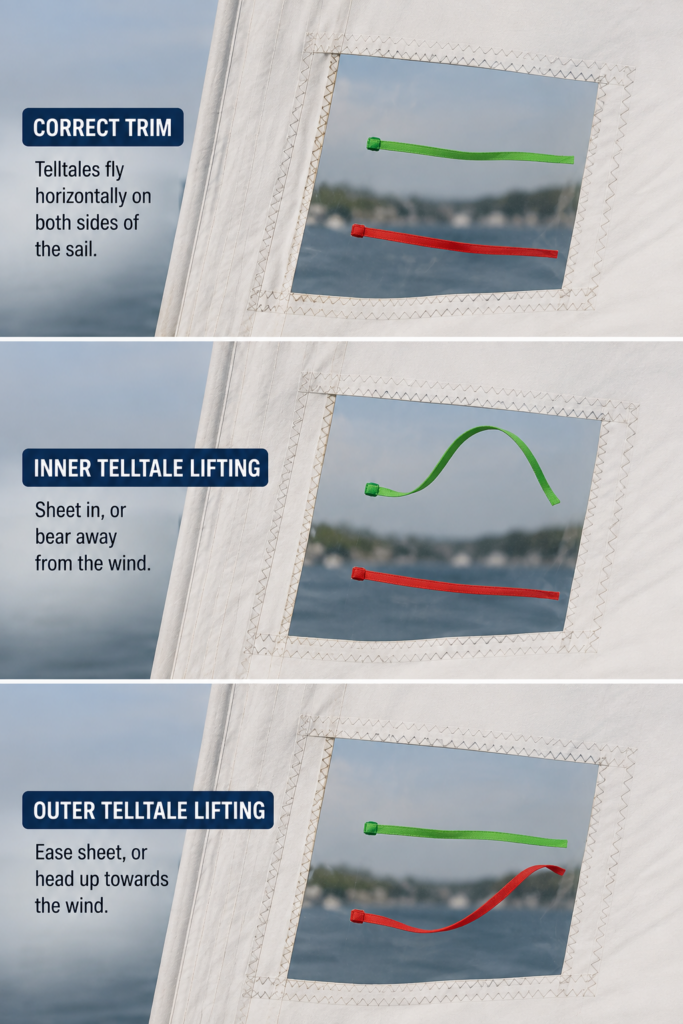
1. Both Telltales Streaming Straight Back
This is the goal most of the time. When both telltales stream smoothly aft, airflow is attached to both sides of the sail and the jib is trimmed efficiently. As a result, the sail is producing good drive with minimal drag.
2. Windward Telltale Lifting
If the windward telltale begins to flutter or lift while the leeward telltale streams normally, the jib is usually trimmed too tightly for the boat’s heading. Instead of pulling the sheet harder, ease the jib sheet slightly and watch the telltales again. Often, only a few centimetres of adjustment are needed.
3. Leeward Telltale Lifting
If the leeward telltale lifts while the windward telltale streams, the jib is generally trimmed too loosely. Trim the jib sheet a little, wait a few seconds for the sail to settle, and observe the telltales again. Because the boat is constantly moving through changing wind, avoid making large adjustments.
Beginner Tip
Watch the telltales—not the sheet. Many beginners stare at the rope and continue trimming until the sail simply looks tight. Instead, let the telltales tell you when the sail is working efficiently.
Common Situations
First, steer the boat onto your chosen point of sail. Next, look at the telltales before touching any control lines. If one telltale lifts, make one small sheet adjustment. Meanwhile, keep steering steadily. Finally, wait a few seconds before deciding whether another adjustment is necessary. This simple observe–adjust–observe routine produces better results than making several corrections at once.
Internal Link Opportunities
How to Trim a Sail
Sail Controls Explained
Points of Sail Explained
Reading Mainsail Telltales
Why They’re Different
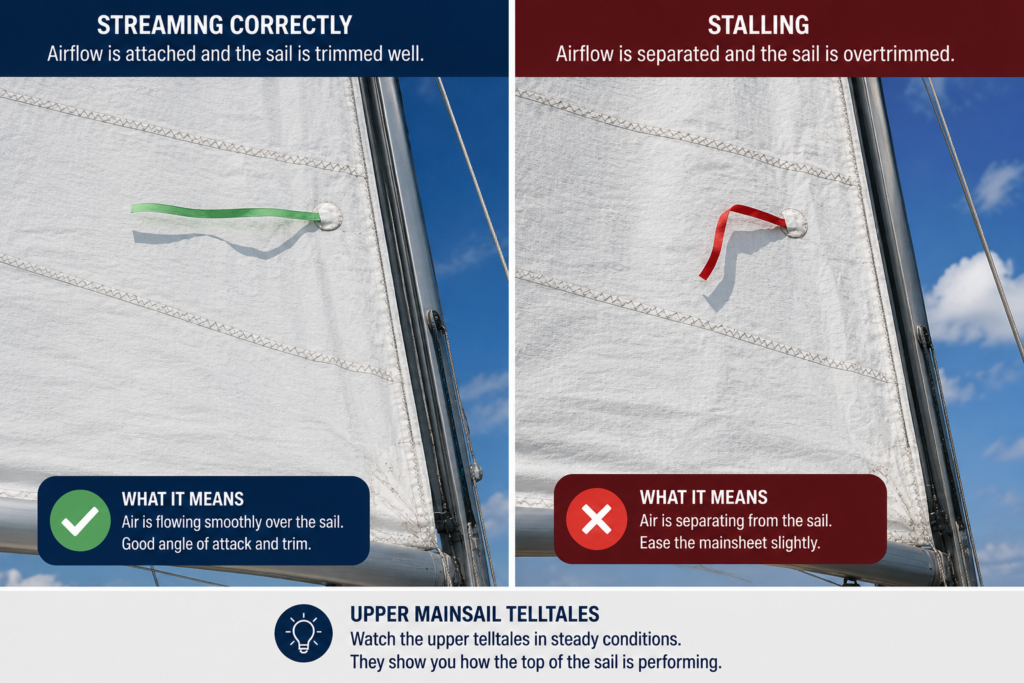
Mainsail telltales are usually attached near the leech rather than the luff. Because they sit farther aft, they are often harder to see and respond a little differently than jib telltales. However, they provide valuable information about how cleanly the air is leaving the sail.
What They Tell You
When the upper leech telltale streams aft most of the time, airflow is remaining attached as it leaves the sail. If it hides behind the sail or stalls continuously, the upper part of the mainsail is no longer working efficiently. Instead of making a large adjustment, ease the mainsheet slightly and watch the telltale again. For beginners, small corrections are almost always better than large ones.
What If the Upper Telltale Stalls?
A stalled upper telltale does not automatically mean something is seriously wrong. Gusts, waves, and steering changes can make it flicker briefly. Instead, look for a consistent pattern. If the telltale remains stalled most of the time, ease the mainsheet a little and observe the result before making another adjustment.
Internal Links
Sail Shape Explained (future)
Traveller Explained (future)
Sail Twist Explained (future)
Reading Telltales on Different Points of Sail
Close Hauled
Telltales are most valuable here. Small sheet adjustments produce noticeable changes.
Close Reach
Continue trimming until both jib telltales stream smoothly while maintaining your course.
Beam Reach
The telltales remain useful, although the sail is eased farther and may respond more slowly.
Broad Reach
Watch for steady airflow, but remember that steering and waves can make telltales flicker more often.
Running
Telltales become much less useful because airflow approaches the sail from behind. Instead, watch sail shape and prevent the sails from collapsing.
Beginner Reminder
First steer a steady course. Next read the telltales. Then make one small trim adjustment. Finally, give the sail time to respond before adjusting again. Because wind and waves are always changing, patience produces better sail trim than constant tweaking.
Using Telltales to Trim Your Sails
Knowing what the telltales mean is only half the skill. The next step is using them to make better sail trim decisions. Fortunately, the process is simple and repeatable. Rather than guessing, allow the telltales to guide each adjustment.
1. Steer the boat onto your chosen point of sail.
2. Watch the telltales for several seconds before touching a control.
3. Adjust only one sail or control at a time.
4. Wait for the boat and sails to settle.
5. Watch the telltales again.
6. Fine-tune only if necessary.
Why Small Adjustments Matter
Many beginners overcorrect. However, sail trim is usually improved with surprisingly small movements of the sheets. First trim or ease slightly. Next observe the telltales. Finally decide whether another adjustment is needed. Because wind strength and direction constantly change, chasing every flicker usually creates more problems than it solves.
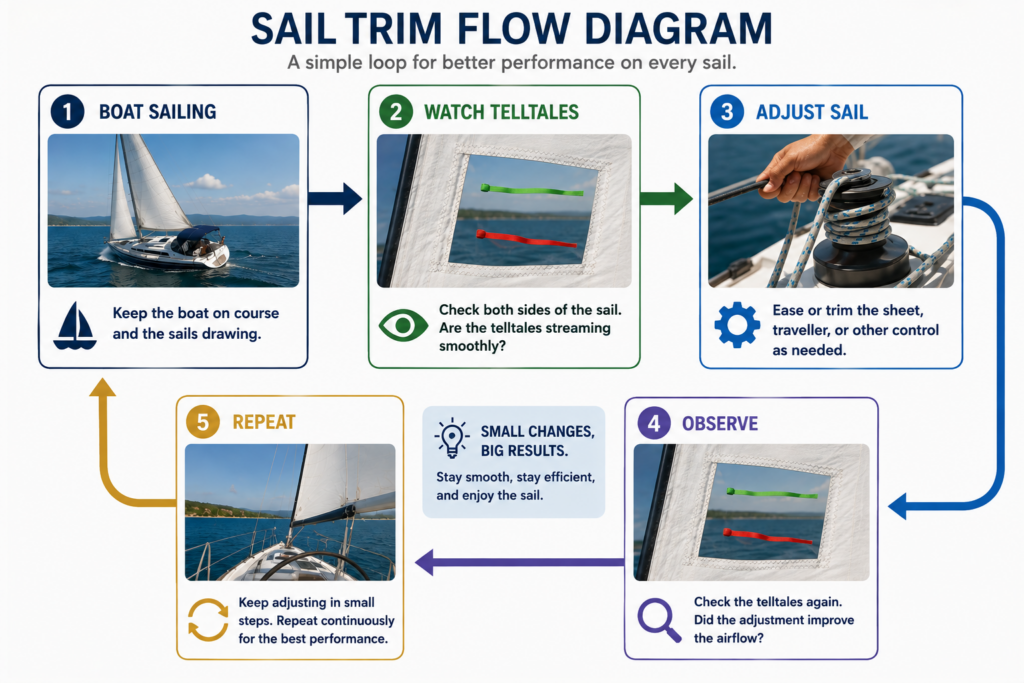
Beginner Tip: Make one adjustment, then observe before making another.
Common Beginner Mistakes
| Problem | Likely Cause | Correction |
| Watching the Rope Instead of the Sail | Focusing on sheet position instead of telltales. | Watch the sail and telltales first. |
| Trimming Until the Sail Looks Tight | Assuming tighter is always better. | Trim only until airflow is correct. |
| Ignoring Wind Changes | Leaving trim unchanged as conditions vary. | Recheck telltales whenever the wind changes. |
| Making Large Adjustments | Overcorrecting after one fluttering telltale. | Use small, deliberate movements. |
| Steering Instead of Trimming | Changing course to fix sail trim. | Hold a steady course before adjusting. |
| Forgetting the Boat Is Moving | Expecting instant results. | Wait a few seconds after each adjustment. |
How Telltales Work with Other Sail Controls
Telltales do not replace the mainsheet, traveller, outhaul, or Cunningham. Instead, they tell you whether those controls are producing efficient airflow. For example, if the wind increases and the telltales begin to stall, you might ease the mainsheet slightly, check the telltales again, then tighten the outhaul or Cunningham if stronger winds persist. As a result, the sail becomes flatter and more balanced without relying on guesswork.
Do You Always Trim for Perfect Telltales?
Perfectly streaming telltales are the goal most of the time, but they are not the only goal. Sometimes comfort, waves, gusts, traffic, or maintaining a balanced boat take priority. For example, in strong, gusty winds you may accept less-than-perfect telltales to keep the boat comfortable and under control. Therefore, use telltales as a guide rather than a rule that must be followed at every moment.
Frequently Asked Questions
What are sail telltales?
Small ribbons or yarn attached to sails that show how air is flowing over the sail.
Which telltale should I watch first?
Start with the middle jib telltales because they are easiest to interpret.
Why is one telltale lifting?
It usually indicates the sail is trimmed either slightly too tight or too loose.
Can I sail without telltales?
Yes, but telltales make accurate sail trim much easier.
Why don’t mainsail telltales always stream?
Changes in wind, steering, and sail twist can interrupt airflow.
Should both telltales always stream perfectly?
Aim for that most of the time, but don’t sacrifice safety or comfort.
Do telltales work downwind?
They become less useful as you approach a dead run.
How often should I check them?
Any time the wind, course, or sail trim changes.
Key Takeaways
Telltales show airflow over the sail, not wind speed.
They are one of the easiest ways to trim sails accurately.
Both jib telltales streaming usually indicate efficient airflow.
A lifting windward telltale often means the jib is trimmed too tightly.
A lifting leeward telltale often means the jib is trimmed too loosely.
Make one adjustment at a time.
Use telltales together with good steering and sail trim.
Knowledge Check
1. What do sail telltales indicate?
2. Which telltale usually lifts when the jib is overtrimmed?
3. Where are jib telltales commonly located?
4. Why are mainsail telltales harder to read?
5. Why should trim adjustments be small?
6. What should you do after adjusting a sheet?
7. Do telltales measure wind speed?
8. On which point of sail are telltales least useful?
9. Which sail control article should you read next?
10. Why are telltales valuable to beginners?
Your Next Steps
How to Trim a Sail
Sail Controls Explained
Points of Sail Explained
How to Read the Wind
How to Steer a Sailboat
Sail Shape Explained (future)
Sail Twist Explained (future)
Traveller Explained (future)
Weather Helm Explained (future)
Reefing a Sailboat (future)
Conclusion
Learning to read sail telltales transforms sail trim from guesswork into observation. First watch the telltales. Next make one small adjustment. Finally observe the result. Likewise, continue building these skills alongside your understanding of sail controls, points of sail, steering, and reading the wind. With practice, telltales will become one of the first places you look whenever you step aboard. As your sailing skills continue to grow, World Sailing offers additional educational resources that complement the techniques covered in this beginner’s guide.
Knowledge Check Answer Key
1. What do sail telltales indicate?
Answer: B. Airflow over the sail
Telltales show whether the airflow remains attached to the sail. They do not measure wind speed.
2. Which telltale usually lifts when the jib is overtrimmed?
Answer: A. The windward telltale
If the windward telltale lifts while the leeward telltale streams, the jib is generally trimmed too tightly. Ease the jib sheet slightly.
3. Where are jib telltales commonly located?
Answer: C. Near the luff of the jib
Most jibs have several sets of telltales positioned near the leading edge (luff).
4. Why are mainsail telltales harder to read?
Answer: B. They are usually located near the leech
Unlike jib telltales, mainsail telltales are commonly attached near the trailing edge of the sail, making them more difficult to observe.
5. Why should trim adjustments be small?
Answer: C. Small adjustments make it easier to observe the sail’s response
Large adjustments often overcorrect the problem and make sail trim more difficult.
6. What should you do after adjusting a sheet?
Answer: B. Wait a few seconds and watch the telltales again
Allow the sail and boat time to settle before deciding whether another adjustment is needed.
7. Do telltales measure wind speed?
Answer: C. No
Telltales indicate airflow, not wind strength.
8. On which point of sail are telltales least useful?
Answer: D. Running
When sailing directly downwind, airflow behaves differently, making telltales much less reliable.
9. Which article should you read next to improve your sail trim skills?
Answer: A. How to Trim a Sail
This article builds naturally on the concepts introduced in this guide.
10. Why are telltales especially valuable to beginner sailors?
Answer: B. They provide immediate visual feedback about sail trim
Instead of guessing whether the sails are trimmed correctly, beginners can use telltales to make accurate, confident adjustments.